
From writing that first long list of everyone who could be there, to making those hard decisions based on your budget and available space, through to dealing with last-minute drop-outs, this blog explains why deciding your guest list is simultaneously the most fun part AND the most stressful part of planning your wedding.
This blog talks through the 5 stages of building your wedding guest list and describes how the process unfolds for just about every couple. If you're engaged, you've probably started stage one already without realising it.
Stage 1: The full list
It always starts innocently. One evening you sit down with a cup of tea (or a bottle of wine) and start writing down who you'd like at your wedding. Twenty minutes later, the list has doubled.
The obvious names go down first: parents, siblings, best friends, the people you'd ring at 2am. Then the floodgates open. The second cousins you last saw at a christening years ago. The colleague you always get lunch with. Your friend's other half, who you've met a couple of times but feel you probably ought to invite.
Then the parents send over their lists, and you discover relatives you didn't know you had.
At this stage, nobody gets cut. The full list is meant to feel far too big. That's the whole point: it's the raw material for everything that follows.
Stage 2: The ABC ranking
This was secretly one of my favourite parts of the whole planning process. You take that sprawling list and sort everyone into three tiers:
- A tier, the must-haves: the people you can't imagine the day without.
- B tier, the want-to-haves: people you'd love to be there, but whose absence wouldn't break your heart.
- C tier, the could-haves: lovely if there's room, but not essential.
It sounds a bit ruthless written down, and it is, a little. But it's also surprisingly fun. It sparks proper conversations about who really matters to you both, plus a few laughs about who ended up where. Expect some light negotiation when your partner puts someone in C that you had firmly in A.

It's also the moment the numbers become real. Your A tier is your minimum headcount. Add the B tier and you've got a realistic target. Suddenly you can hold the list up against your budget and venue and see what you're actually working with.
Stage 3: Drawing the line
And then comes the hard part.
For most of us, there's a limit to what we can afford and how many people we can fit, especially with wedding prices where they are today. There has to be a cut-off somewhere. The question is where.
Usually your budget and venue make the call for you. Catering is often priced per head, every venue has a capacity, and somewhere between your A and C tiers, the line appears.
One thing worth knowing: not everyone will say yes. We allowed for around 5 to 10% of guests not being able to make it, which gave us a little room to invite a few more people without panicking. The golden rule is to only do this if you could still cope if every single person said yes.
The great plus-one debate
Then there's the question every couple seems to wrestle with in 2026: what's the rule on plus-ones?
There isn't really one any more, and every couple is different. The older generation tends to assume partners are always invited. But with costs as they are, that's changing. More couples would rather fill their seats with the friends and family they actually share memories with.
We found most people completely understand. If you're not that close to someone's other half as a couple, it's totally fine not to invite them.
Stage 4: The table plan
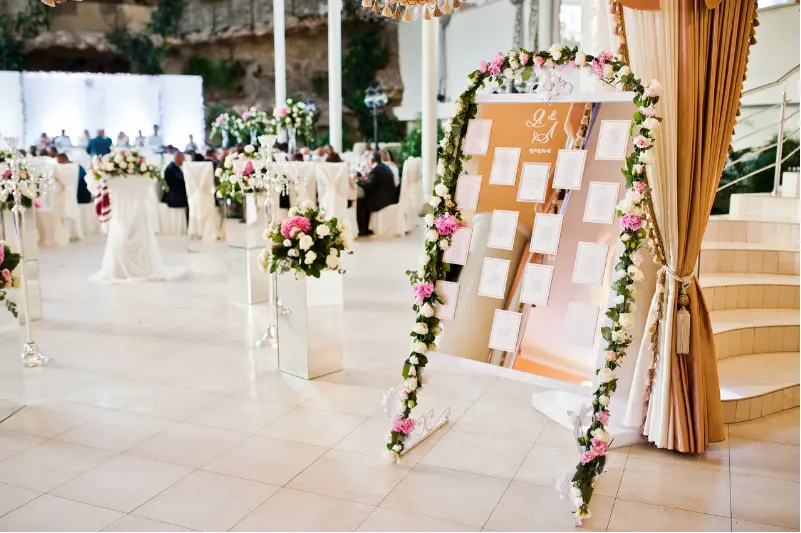
With the list finally settled and the wedding a few months away, you reach the stage that sounds the easiest: deciding where everyone sits.
How hard can it be? You have tables. You have guests. Put the guests at the tables.
Then you actually start, and it turns into a game of 9D chess. You're balancing family politics with the physical space in the room, and every move seems to create a new problem.
“Oh no, now Sarah's right next to her ex.”
“Do you think my auntie will get on with him?”
“Should friends or family be closest to us?”
This is the whole reason I built TableScape. Seeing the plan laid out in front of us made it so much easier to spot problems. My fiancée and I made several versions to test seating different groups together before settling on the one that felt right. (If you're at this stage now, here's how to make a seating plan step by step.)
Stage 5: The drop-outs and last-minute call-ups
You'd think that once the plan is done, you're finished. Not quite.
However much notice you give, and however much of a social faux pas it is, there will be drop-outs in the week before the wedding. Things come up: illness, family emergencies, new babies, and the occasional excuse you might find a little hard to believe.
My advice? Don't let it bother you. It happens at nearly every wedding, and it's rarely personal.
In fact, it can work out brilliantly. A few late gaps meant we could give some of the plus-ones we hadn't originally invited a last-minute call-up. There was no awkwardness at all. They came. It was great. We all had a brilliant time.
Because our plan was in TableScape, shuffling people around took minutes, and we sent the new version straight to our caterers. No dramas.
How TableScape can help
I built TableScape for exactly those last two stages. You can import your guest list from a CSV, set up round tables, long tables and a top table, drag guests onto seats and see dietary requirements at a glance. When the drop-outs arrive, move a few people and print a fresh PDF or export a CSV for your venue and caterer.
It's free to start, with a one-off payment to keep editing and no subscription. See what's free.