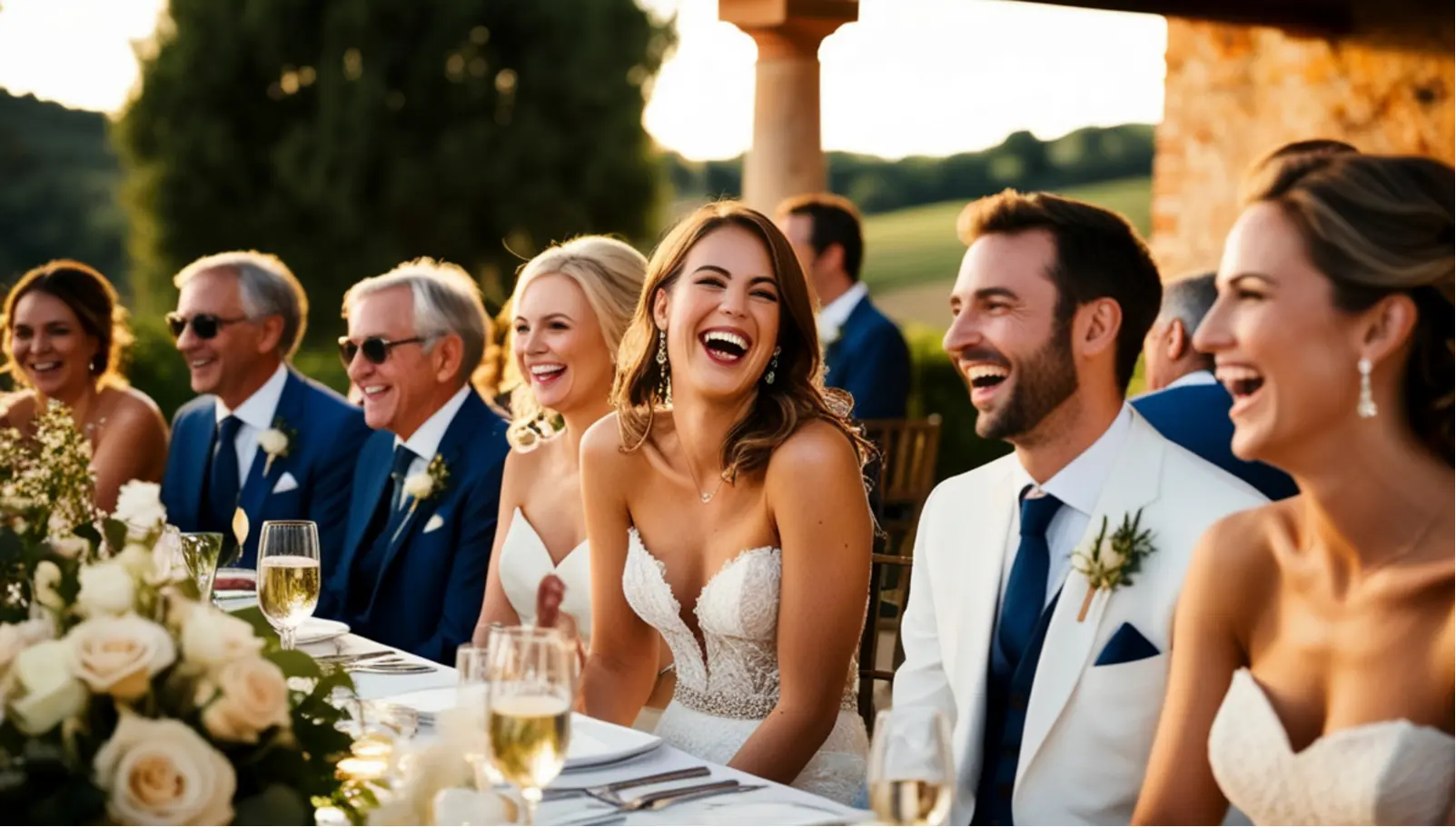
Should I have a top table at my wedding or not? It's a question every engaged couple battles with at some point, and one of the oldest debates in wedding planning. Your parents probably assume you'll have one. Your friends might think it's a bit old-fashioned. And you're stuck in the middle, trying to work out what feels like you.
A sweetheart table puts you on show, a top table confirms who the real VIPs in the room are, and no top table at all can feel less formal. So which set-up should you go with? This post walks through the pros and cons of each.
The case for is simple. Everyone gets a clear view of the two of you, and you get to look out over a room full of the people you love. It's your day, and a top table makes sure you stand out.
The case against is mostly about people. Deciding who sits up there with you can turn into a minefield of family politics. Some couples would much rather be in amongst their guests than on display. And even once you've decided to have one, there are more decisions waiting: a sweetheart table for two, or a bigger table with seats on one side or both.
If you've read my post on the 5 stages of building a wedding guest list, you'll know this decision lands right in stage 4: building the table plan. Your list is final, you know who's coming, and now you have to work out where everyone sits, starting with the two of you.
At a glance
| Layout | Best for | Watch out for |
|---|---|---|
| Sweetheart table | Time together on a busy day, and sidestepping family politics. | One of you eating alone while the other does the rounds. |
| One-sided top table | The classic look, beautiful photos and a clear view of the speeches. | Guests at each end with only one person to talk to. |
| Double-sided top table | Fitting more of your closest people around you. | Half the table sitting with their backs to the room. |
| No top table | A relaxed, dinner-party feel with the most people around you. | You still choose who sits nearest, and some guests see the backs of your heads. |
Who should sit on the top table? (Or should it just be you two?)
The first big question is who joins you. Traditionally that's parents and the wedding party, but plenty of couples now skip the guest list altogether and go for a sweetheart table: just the two of you.
A sweetheart table makes it all about the happy couple, and it has a hidden bonus. Wedding days are full-on. Between the photos, the speeches and a hundred hugs, you can go hours without a proper conversation with each other. A table for two gives you a little pocket of time to talk about the day and take it all in. It also neatly sidesteps the politics. No agonising over whether your step-dad should be closer than your best man, or which grandparents make the cut.
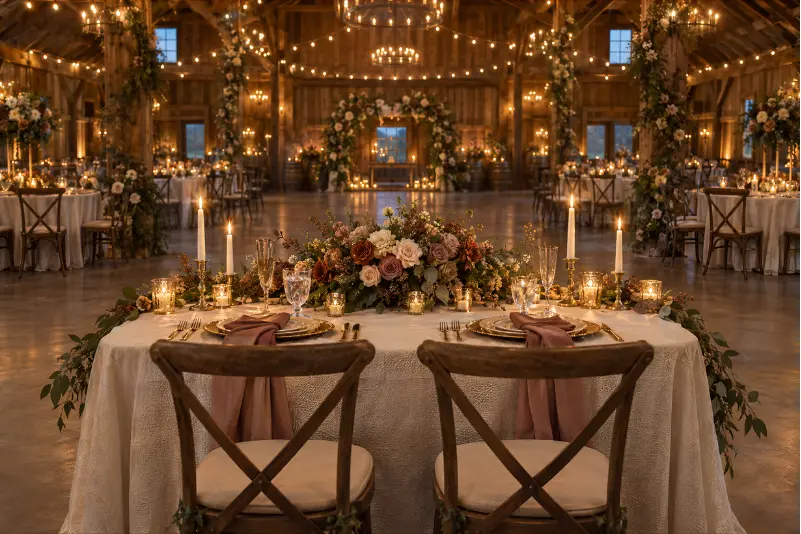
The one big drawback? When one of you gets up to do the rounds and chat to guests, the other is left eating on their own, looking a bit lonely at a beautifully decorated table.
Our tip: If you do opt for a sweetheart table, plan to do the rounds together. Pick a natural moment, such as between courses, and circulate the room at the same time, so nobody gets left behind.
One-sided or double-sided top table?
If you do want company, the next choice is the shape of the table itself.
Traditionally, the top table is a long, one-sided table at the front of the room, with everyone facing the guests. The couple sit in the middle, flanked by their parents, with the best man and chief bridesmaid (or maid of honour) at either end. In the classic line-up, each parent sits next to their opposite number from the other family, which is meant to help the two sides get to know each other.
These days, very few couples stick to that exactly. Step-parents, grandparents, partners of the wedding party and blended families all mean the "rules" get bent, and that's completely fine.
A one-sided top table is still the classic look. It photographs beautifully, and everyone up there gets a clear view of the speeches. But it has a quirk of its own. The people at each end only really have one person to talk to for most of the night. So choose your end guests carefully, and hope they get on well! Stretch it too long and the people at the ends can feel a mile away from you, too.
A double-sided top table lets you fit more of your closest people around you, which is lovely on the big day. It feels less like a stage and more like a big family dinner. The catch is that half of them will be sitting with their backs to the room. Some people won't mind at all. Others will spend the speeches twisted round in their chair.
What about no top table at all?
This set-up is becoming increasingly popular, and we're seeing it in more and more TableScape plans. Instead of sitting at the front, the couple sit right in the middle of the room, in amongst it all, with the other tables arranged around them.
It maximises the number of people around you, and it brings a completely different energy. Rather than everyone looking up at the front, happiness radiates out from the centre of the room. It suits couples who want the meal to feel more like a dinner party than a formal occasion.
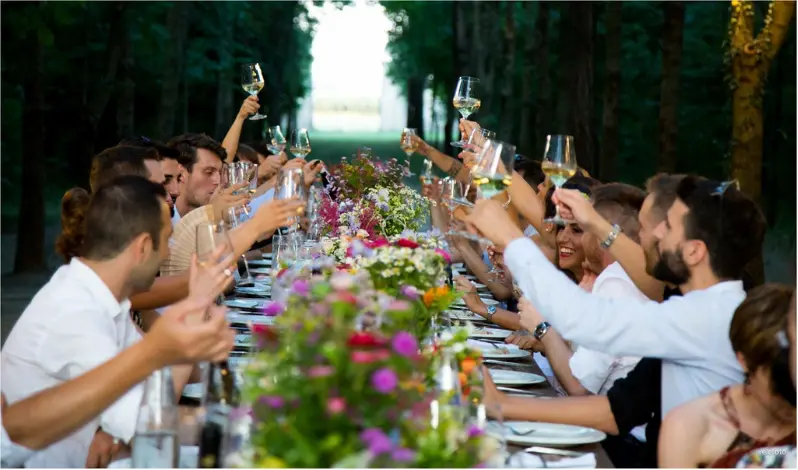
One thing it doesn't get you out of: deciding who sits nearest. Even in the middle of the room, some tables will be right beside you and some will be over by the bar. So you still need to choose which family and friends get the closest seats.
And this is where the biggest shift is happening. With families becoming more "modern", more couples are choosing to surround themselves with their friends, with parents and relatives on the tables just beyond. There's no wrong answer, but it's worth talking it through with your families early, so nobody gets a surprise on the day.
The trade-off is that some guests may spend the meal looking at the backs of your heads. The fix is the same as for a sweetheart table: take a walk round the room together during the meal and say hello to every table.
So, should you have a top table?
Ultimately, every couple is different, and only you can decide what's right for your day. A grand top table, a cosy sweetheart table or sitting in the middle of the party can all work beautifully.
This post isn't here to tell you what to do. It's just a few different perspectives, and hopefully a couple of things you might not have thought about yet.
If you want to see how each option would look in your room, TableScape lets you set up a top table or sweetheart table, try long tables with seats on one or both sides, and move them around until it feels right. See the table layouts you can use.
Frequently asked questions
What is a sweetheart table?
A sweetheart table is a small table for just the couple, usually at the front of the room. It replaces a traditional top table, so no other guests sit with you.
Who traditionally sits on a wedding top table?
Traditionally, the couple sit with their parents and the wedding party, such as the best man and maid of honour. Many couples now adapt this to suit their families.
Do you have to have a top table at a wedding?
No. Plenty of couples choose a sweetheart table or sit among their guests in the middle of the room. It's entirely your choice.
Happy planning,Sam @ TableScape